Malaka: A Modern Script Font for Makers
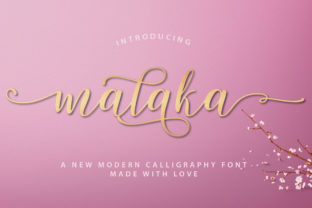
There is a specific kind of magic that happens when you are staring at a blank canvas in your design software, trying to decide how to present your latest handmade creation. I remember sitting at my desk last Tuesday, surrounded by sheets of kraft paper and rolls of matte vinyl, trying to finalize the label design for a new batch of soy candles. The scent was lavender and vanilla, soft and comforting, but my initial text choices felt too rigid. That was until I loaded Malaka, a stunning entry in the world of Script Handwritten Fonts. As soon as I typed out the product name, the irregular baseline danced across the screen, giving the design an immediate sense of movement and organic charm that perfectly matched the hand-poured nature of the candles.
Elevating Wedding Invitations with Malaka’s Irregular Baseline
One of the most compelling features of this typeface is its ability to mimic the natural flow of human handwriting without sacrificing legibility. For invitation designers and stationery creators, Malaka offers a solution to the common problem of script fonts looking too perfect or mechanical. The irregular baseline is not a flaw; it is a feature that adds rhythm and personality. When designing wedding invitations, this subtle variation makes the text feel personal and bespoke, as if it were penned by a calligrapher specifically for the couple. It transforms a standard digital file into something that feels emotionally resonant. Whether you are creating save-the-dates, ceremony programs, or thank you cards, the trendy and delicate strokes of Malaka ensure that the typography complements the floral arrangements and color palettes rather than competing with them.
Creating Cohesive Branding for Boutique Logos
Beyond individual projects, consistency is key for any small business owner. Using Malaka for your logo design can establish a strong brand identity that feels both modern and approachable. Many crafters struggle to find a font that works well for both their primary logo and their secondary packaging elements. Because Malaka is versatile, it bridges this gap effectively. You can use it for your main business name on your website header and then carry it over to your business cards and social media graphics. The delicate lines suggest sophistication, while the handwritten style maintains accessibility. This duality is crucial for brands that want to appear professional yet friendly, such as boutique clothing stores, artisanal bakeries, or handmade jewelry shops.
Designing Readable Labels for Small Packaging
When it comes to physical products like stickers, jar labels, or hang tags, readability is often the biggest challenge. Script fonts can sometimes become illegible when scaled down, but Malaka manages to retain clarity even at smaller sizes. I recently tested this by printing a set of circular stickers for a line of homemade jams. The font’s open counters and distinct letterforms ensured that the flavor names were easy to read from a distance. For makers using cutting machines like Cricut or Silhouette, this clarity is essential. It reduces the risk of weeding errors and ensures that the final cut looks clean and professional. When selecting fonts for product labels, always test a print proof at actual size to confirm that the delicate swashes do not merge or break during the cutting process.
Pairing Malaka with Sans Serif Fonts for Balance
To maximize the impact of Malaka, consider how it interacts with other typefaces. A common mistake in graphic design is pairing two script fonts together, which can create visual clutter. Instead, pair Malaka with a clean sans serif font or a simple serif font. This contrast allows the script to shine as the decorative element while the secondary font handles the informational content, such as ingredients, dates, or instructions. For example, on a tote bag design, you might use Malaka for a catchy phrase like "Hello Sunshine" in large, sweeping letters, while using a minimal sans serif for any smaller details. This hierarchy guides the viewer’s eye and creates a balanced composition that feels intentional and polished. Experimenting with different font pairings can help you discover unique styles for seasonal products or limited-edition releases.
Enhancing Digital Downloads and Printable Wall Art
The rise of digital products has opened new avenues for font usage, particularly in the realm of printable wall art and planner pages. Malaka is exceptionally well-suited for quotes and inspirational phrases that customers want to display in their homes. Its trendy aesthetic aligns well with current interior design trends, such as bohemian, minimalist, or farmhouse styles. When creating digital downloads, ensure that you are providing high-resolution files where the font’s delicate details remain sharp. Customers appreciate when the typography in a printable piece feels curated and artistic. Additionally, for planner creators, using Malaka for section headers or monthly titles can add a touch of elegance to functional pages, making the planning experience more enjoyable for the user.
Checking Licensing and File Formats for Commercial Use
Before integrating any new typeface into your commercial workflow, it is vital to understand the licensing terms. Most premium fonts, including those in the Script Handwritten category, come with specific guidelines for commercial use. Ensure that your license covers physical products, such as mugs, shirts, and packaging, as well as digital end-products like templates. Check the included file formats, such as OTF or TTF, to ensure compatibility with your design software. Some fonts also include alternates, ligatures, and swashes that can add variety to your designs. Taking the time to explore these extra characters can prevent your designs from looking repetitive. Always keep your license documentation organized, as this protects your business and ensures you are respecting the work of the type designer.
Incorporating Malaka into your creative toolkit can transform the way your products are perceived. From the first glance at a wedding invitation to the tactile experience of peeling a sticker off a candle jar, typography plays a silent but powerful role in customer engagement. By choosing a font that balances modern trends with delicate, human touches, you elevate your handmade items from simple goods to cherished keepsakes. Whether you are designing for a single client or building a broader brand identity, let the irregular beauty of Malaka guide your creative decisions.